.svg)



Nest Framework
Nest is a school inclusion model for Autistic students, in which Autistic students are educated in their neighborhood school alongside their general education peers. They receive specialized supports to be successful with the general education curriculum and develop their social and behavioral competence, in order to ultimately realize their full, unique potential as independent and happy adults.
CLASSROOM SUPPORTS
Built on a foundation of solid instructional practice, Nest classroom supports are devised to help Autistic students and benefit general education students
Class-wide Strategies: Whole-class social, sensory, behavioral, and academic strategies form a foundational level of support; individualized strategies are developed as necessary for students with greater needs
Integrated Therapeutic Supports: Teachers collaborate with therapists to devise strategies that help to create a therapeutic classroom environment
Landmark Documents: Documents outline the use of classroom strategies and serve as a reference and resource for teachers, therapists, and administrators
Social Development Intervention: Speech therapists and classroom teachers co-lead specialized small-group focus time; teachers generalize supports across the day
COLLABORATIVE STRUCTURES
Collaboration takes place through a series of structures with a variety of stakeholders, at all levels of the model Co-teaching & Co-planning: Classroom teachers co-plan and deliver instruction using a variety of co-teaching models Nest Cluster Teacher: A Nest-trained teacher supports students in out-of-classroom experiences, such as lunch, recess, and special subjects, like art, music, and gym
Team Meetings: After-school meetings are held weekly, with all relevant staff and administrators, to discuss program business and case conference each student to devise comprehensive support plans
Nest Coaches: Nest Coaches in schools receive additional training and support to become an internal point person for the Nest team, supporting teachers and students, and creating cohesion in the Nest team
Home-school Connection: Regular communication takes place with families, through emails, calls, and meetings, and support from a social worker or guidance counselor
Outside Support: Nest consultants help schools implement the model, problem-solve challenges, and work to develop schools’ internal capacity
SYSTEM-WIDE STRUCTURES
Nest schools, under the leadership of their principals, commit to implementing the model; districts commit to funding for the program, for training staff, and for other school system supports
Reduced Class Size: Smaller classes create a comfortable learning environment for students
Training & Professional Development: Pre-service trining and ongoing professional development prepares all teachers, therapists, and administrators for working with Nest students
Committed Administration: Principals and assistant principals are the school-level stakeholders who secure buy-in from staff, families, and the broader school community
Inclusive Classrooms: Nest classes are co-taught integrated inclusion classrooms
PHILOSOPHICAL FOUNDATION
Several shared beliefs serve as the foundation upon which all structures and practices are built
Understanding of Autism: Autistic students think and learn differently than allistic students; accordingly, all Nest practices stem from a recognition of students’ neurological differences which manifest as differences in social understanding, sensory sensitivity, self-regulation challenges, etc.
Focus on Strengths: People are more motivated when they do something they’re good at; in Nest, students’ strengths and interests are honored and incorporated, instead of focusing on areas of deficit
Authentic Inclusion: Inclusion is not a location; students in Nest are recognized as full contributing members to the class and school community, throughout the entire day
Collaboration: The real expert in any school is the team; in Nest, collaboration exists between and across disciplines, and among the transdisciplinary team of teachers and related service providers
Individual Support: If students don’t learn the way we teach, then we must teach the way they learn; In Nest, teams collaborate to devise individualized supports for struggling students
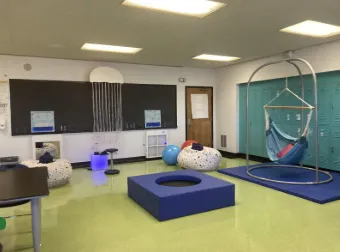
Therapeutic Environment: Students’ home base is their classroom; Nest classrooms utilize supports typically provided by outside specialists so students have a safe environment where they can comfortably interact with their peers Social Development: Social development is essential to Autistic students; in Nest, social is supported through building of competence, developing relationships, and addressing internal motivation, which support independence and self-advocacy Positive and Proactive Support: Proactive planning and support leads to meaningful reduction in challenging situations; encouragement of new skills and praise supports development and results in long-lasting change
Family Involvement: Families provide invaluable knowledge about their children; in Nest, families are part of the team, involved in decision-making, updated regularly about changes and progress, and provided with resources such as targeted workshops and newsletters
.avif)

.avif)